How to fix the broken housing market
Should we increase housing density?
September 13, 2024 15 Minute Read

The UK is among the most sparsely populated countries in Europe. Consequently, our homes aren’t as densely concentrated compared with other countries. The same, is also true of our cities. The most densely populated square kilometre in the country, for example, is London’s neighbourhood of Maida Vale, which hosts around 20,000 people. In contrast, some urban areas in Europe exceed 50,0000 people, peaking at 53,000 in Barcelona. And if we take the number of people living in apartments as an indicator of housing density, this accounts for almost half (48%) of Europe’s population, compared with just 17% in the UK. This suggests that there may be the potential to increase the density of our residential developments, which would enable more homes to be built without expanding the development footprint.
As well as a more efficient use of land, which saves valuable space, there are several benefits of higher density living. Firstly, it can build larger communities and promote greater social interaction. It also leads to better utilisation of public transport compared with lower density areas which are typically more reliant on cars. This can result in significant benefits both from an environmental and personal cost basis. Being closer to places of work and leisure also mean people in high density areas can opt to walk or cycle to their destination more so than lower density suburban areas. Other public infrastructure also benefits from economies of scale, making it more efficient and cost effective by serving more people in less space. A high-density development can be visually appealing and provide a desirable living environment if implemented effectively. It promotes the concept of "compact cities" as an alternative to urban sprawl. And this is generally supported in the UK, particularly for our cities which are constrained by Green Belts which often necessitate higher density housing.

However, if not designed and managed well, higher density housing can present risks. For example, a large community can become overcrowded which can create associated problems. Some high-density council housing schemes built throughout the 1950s and 1960s, for example, became synonymous with deprivation and high rates of crime. Albeit the high housing density was just one factor that contributed to the challenges associated with these estates. It can also put more strain on public infrastructure and without adequate public transport, traffic congestion and pollution can be a lot worse in high density areas. And if there isn’t an adequate provision of public outdoor space and other amenities, the quality of life in high density areas can be worse.
Increasing housing density therefore requires careful planning and design to balance these factors. The most obvious way to increase density is by building new high density residential towers or regenerating existing housing estates to deliver more homes on the same site.
Another way, which is more suited to suburban areas, is the concept of ‘gentle densification’. This is the term used to capture developments of three to seven storeys, essentially emulating the Georgian style mansion blocks of that era. This can increase the number of new homes whilst also maintaining a ‘human-scale’ character. It can also combat the loss of community that can sometimes come with tall tower blocks. Housing of this form is common in other European cities like Paris, Amsterdam, and Copenhagen, but much rarer in the UK. However, there are some examples of where this has been achieved, including the The Bourne Estate in London and Marmalade Lane in Cambridge. The latter accommodates 42 homes per hectare (ha), three times more than Cambridge’s average density of 14 homes per ha.
Can housing density be increased in the UK?
Technically yes, and we can even compare our current housing densities to illustrate where these could be increased. For example, London’s housing is the densest in the UK at approximately 24 homes ha. This ranges from 17 homes per ha in Outer London, to 51 homes per ha in Inner London. The most densely populated area is the borough of Kensington and Chelsea with 74 homes per ha. But housing density varies widely across England’s major towns and cities, from 23 per ha in Portsmouth to just 7 per ha in Leeds. This therefore provides an indication that density could be bolstered in a lot of urban areas.
Figure 1: Average housing density (no. of homes per ha), selected towns and cities
What are the challenges to increasing density?
The challenges can be broadly grouped into three categories: financial viability, planning regulations, and local community.
Firstly, tower blocks are more expensive to build compared with terrace homes, meaning the price of the finished homes needs to be higher to make the development financially viable. In London for example, this benchmark sales value is currently around £750 per square foot (psf), which potentially excludes many parts of the city from being able to support high-rise residential towers. The cost of building a tower has been further compounded by high build-cost inflation recently. New requirements for a second staircase in buildings over 18 metres high, whilst essential, also adds additional cost to a tower development.
Figure 2: London areas with new build sales values of £750psf or more, 2021 – present
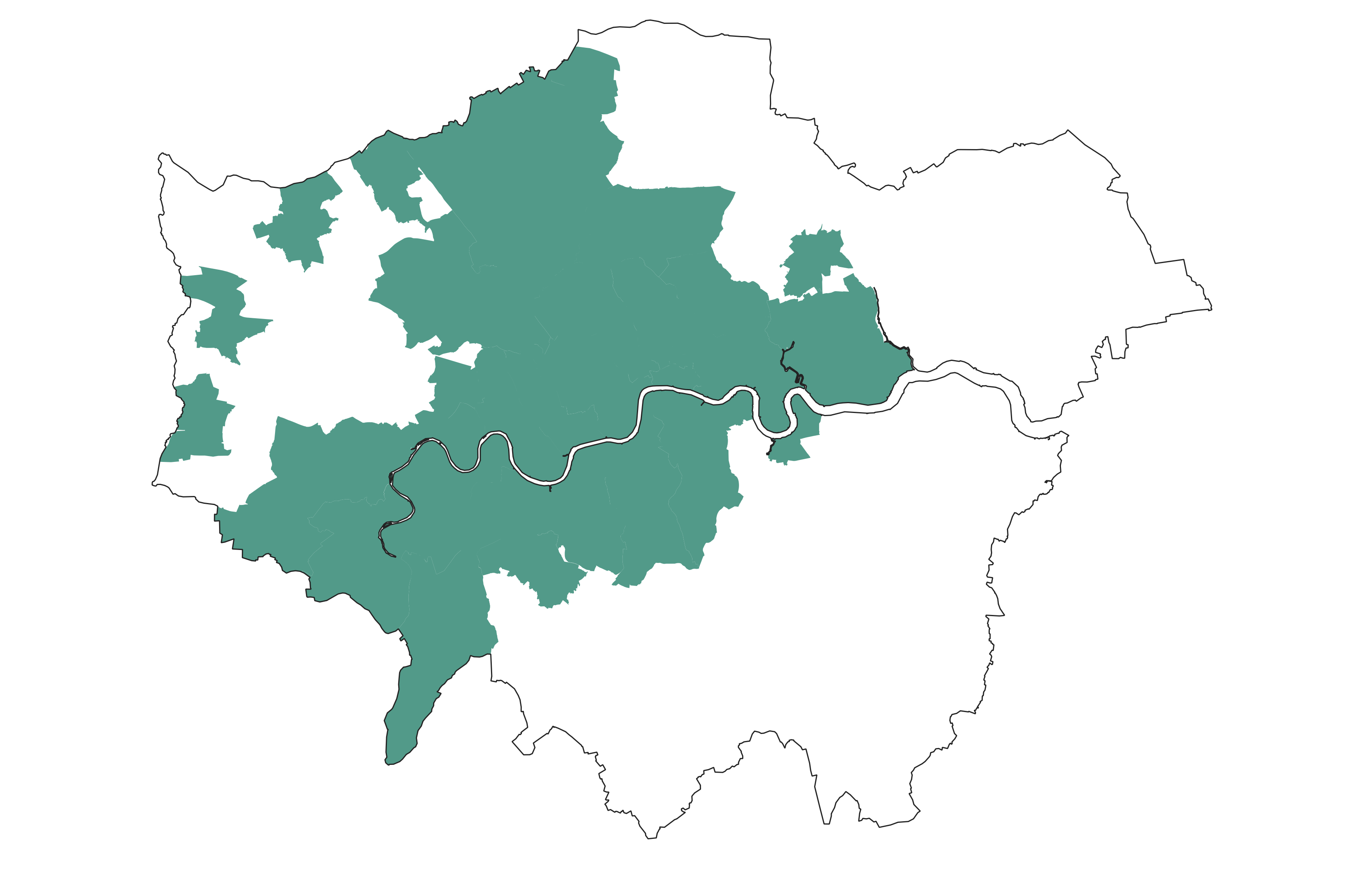
Certain planning regulations can also be a barrier to increasing housing densities, such as those centred around protected vistas and conservation areas. For example, there are 13 protected viewing corridors in London where tower development is prohibited. And although development is not prohibited in a conservation area, planning will come under greater scrutiny and be more costly.
Thirdly, the local community can often be cautious of any new development, particularly a high-density one that could place a strain on local services and infrastructure. This is particularly the case in suburban areas where densification would be more obvious. But there appears to be ways to overcome this through design and education. The London School of Economics found that high-density buildings that are made to appear less dense through their design (by incorporating traditional design elements such as pitched roofs and the use of familiar materials) were deemed more acceptable. In addition, it found that residents who are convinced of the housing crisis (in London in this instance), were more amenable to higher density development.
In addition, The Strategic Land Group point out that the interaction of market forces and planning policy are a barrier to gentle densification. The current discretionary and expensive planning system results in a lot of uncertainty for developers, and negatively impacts the viability of any given project.
However, some point out that there is a danger that gentle densification may be favoured over other forms of higher density housing which may not fully meet the future challenge of building enough homes.
The obvious solution is a mix of densities from low to high. Either way, planning reform seems to lie at the heart of unblocking many of the challenges associated with increasing housing density, and supply more broadly. The one certainty is that we need more homes, and delivering these on land that is already developed would be an ideal solution.

How to fix the broken housing market
Contacts
Adam Cradick
Head of London Living Land Transactions


Related Service
- Property Type
Living
Unlock residential real estate potential with expert investment, financing, valuation, agency, and design strategies across all living sectors.