Article | Creating Resilience
Electric heating: Key to meeting minimum energy efficiency standards (MEES) and protecting asset values
September 9, 2025 8 Minute Read

New CBRE analysis reveals growing incentives for commercial landlords to adopt energy efficient electric heating systems. Buildings using electricity for heating benefit under the current Energy Performance Certificate (EPC) calculation methodology, whereas buildings using gas boilers are penalised.
This has implications for asset owners and operators to ensure compliance with the proposed future Minimum Energy Efficiency Standards (MEES). We expect this target to be announced later this year with a deadline for compliance set sometime between 2031 and 2035. MEES regulations are becoming easier to meet for buildings where electricity is used for heating, but harder where gas is used.
Ability to comply with future minimum standards and energy efficiency improvements is likely to affect landords’ asset values, with those further from the minimum standard experiencing value discounts. CBRE’s Sustainability Index, released in March, provides evidence this is already happening. These energy performance standards are particularly relevant for office spaces and other commercial properties, which must meet specific EPC requirements to remain compliant and attractive in the market.
The analysis also suggests that some buildings using electricity for heating with an EPC issued before June 2022 could improve their EPC rating without the need for capital expenditure. For investors and landlords concerned about how to meet proposed MEES regulations, re-commissioning EPCs across a portfolio could reveal compliance to be lower cost and less disruptive than expected.

Buildings using electric heating systems have better EPC ratings on average
In June 2022, the EPC calculation methodology was updated to reflect that buildings using electricity are responsible for fewer emissions than they used to be, due to the decarbonisation of grid-supplied electricity in the UK.
Prior to the calculation methodology change in June 2022, the average office, logistics, and retail building using gas for heating had better EPC scores than the average equivalent using electricity.
For commercial EPCs, a lower score results in a better rating. For example, an EPC score of 1 translates to a rating of A, whereas a score of 101 translates to an E (see figure 1 below). Properties with a rating of F or G are subject to improvement requirements under current MEES regulations, meaning landlords must take action to improve these ratings or seek an exemption. Most exemptions last for five years, but a temporary exemption is available for new landlords for six months after they take over a property.
Figure 1: Commercial EPC score bands and equivalent ratings
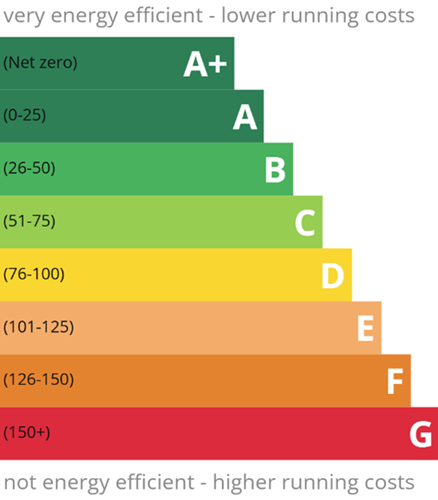
Historically, lower average EPC scores (resulting in better ratings) for buildings using gas have incentivised landlords and investors to continue to use gas boilers rather than make the transition to electric heating systems such as heat pumps.
Figure 2 shows that since June 2022, the opposite is true. On average, buildings using electricity for heating record significantly better scores than buildings where gas is used.
Figure 2: Average score for EPCs where gas and electricity are used for heating, pre and post methodology change – split by building use type. (Lower score results in a better rating)
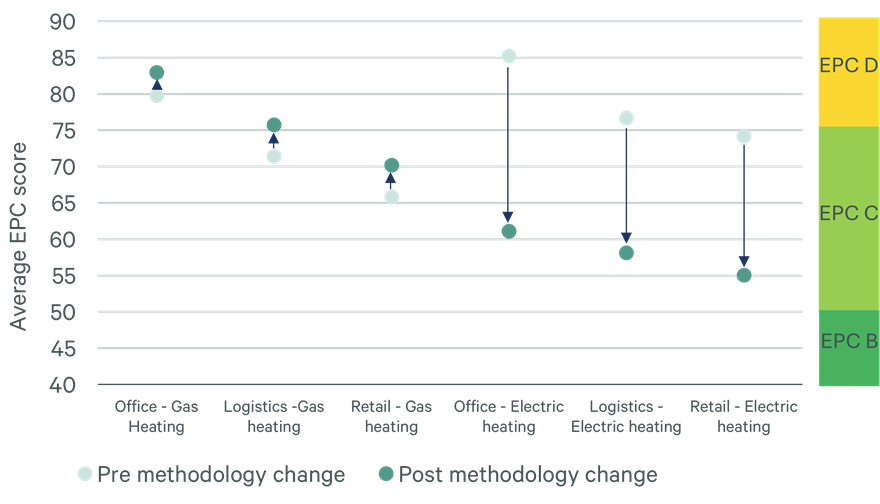
In the office and logistics sectors, average EPC ratings for buildings with electric heating improved from a D to a C. Where electricity is used for heating, across all sectors, the threshold for achieving EPC rating of B is within reach. This is likely to reduce the CapEx required to achieve the proposed future minimum standard compared to a gas heated building. To achieve better ratings, specific measures such as insulation upgrades or more efficient heating systems may be recommended in the EPC report.
Meanwhile, where gas is used, EPC scores have become worse on average. In the case of logistics, this has moved the average EPC rating from a C to D. Achieving an EPC rating of B has become more challenging for buildings using gas for heating.
Other incentives for electric heating systems
It's not just the EPC regime which is making heat pumps look increasingly advantageous. Attracting and retaining occupiers is another incentive to electrify heating. Occupiers aiming for net zero emissions will seek space without fossil fuel heating. CBRE’s 2022 Sustainability survey showed that 47% of UK occupiers surveyed had a net zero target set for 2030. Buildings using gas for heating are increasingly likely to miss out on this portion of the market as 2030 approaches.
There are also proposals to phase out the installation of gas boilers. The Climate Change Committee’s (CCC) Seventh Carbon Budget suggests this should happen in mid-2030s, although a date has not been confirmed by the Government. If this is to happen, there will be a surge in demand for heat pumps and installers which could increase prices and wait times. At the end of a boiler’s natural life when replacement is necessary, switching to a heat pump even before the phase-out occurs could be more cost effective – both through the potential for lower OpEx on energy and because of current subsidies reducing CapEx.

What actions should landlords take to meet energy efficiency standards?
1. Understand EPC coverage in detail
Make sure visibility of EPCs is 100% and the heating fuel is known. Be sure to understand whether EPCs were issued before or after the change in calculation methodology. Use information on EPC issuance date in combination with heating fuel to decide on actions.
2. Investigate transitioning from gas to an efficient electric heating system
Although upfront installation costs can appear high, there are Government grants available for heat pumps, making them a more cost-effective long-term solution. Heat pumps are likely to help buildings comply with upcoming regulations and may become a necessary energy efficiency measure.
Investigate whether heat pump installation is viable for buildings when the gas boiler next needs replacing.
3. Consider securing new EPC for buildings using electric heating systems
If a building uses electricity for heating and its EPC was issued before June 2022, re-commissioning the EPC could lead to an improvement in EPC rating. This could even occur if nothing has changed in the building and no CapEx has been made.
Understanding the likely improvement in EPC score for buildings heated electrically can help landlords calibrate the additional work and costs required to meet the minimum standard which may now be lower than previously estimated.
Contacts


Related Insights
-
Article | Creating Resilience
What can we expect from the upcoming changes to Minimum Energy Efficiency Standards?
June 24, 2025

Upcoming changes to Minimum Energy Efficiency Standards are set to require an EPC B rating for commercial properties between 2030 and 2035 as the UK targets an 87 % reduction in real estate emissions.
-

Welcome to our 2025 UK Real Estate Market Outlook Mid-Year Review; in which we look back and evaluate our expectations for 2025 made at the beginning of this year.
-

Around two-thirds of owner-occupied homes in the England and Wales are classed as ‘inefficient’, according to government data, in that they have an Energy Performance Certificate (EPC) rating of D or lower.
Related Service
- ESG & Sustainability Solutions
ESG & Sustainability Solutions
Transform your real estate assets and achieve your sustainability aspirations with our innovative solutions.