Article | Intelligent Investment
Business Insights: Robust occupier demand drives Multifamily Housing investment
Read our analysis of the Multifamily Housing index released earlier this year.
July 14, 2026 7 Minute Read
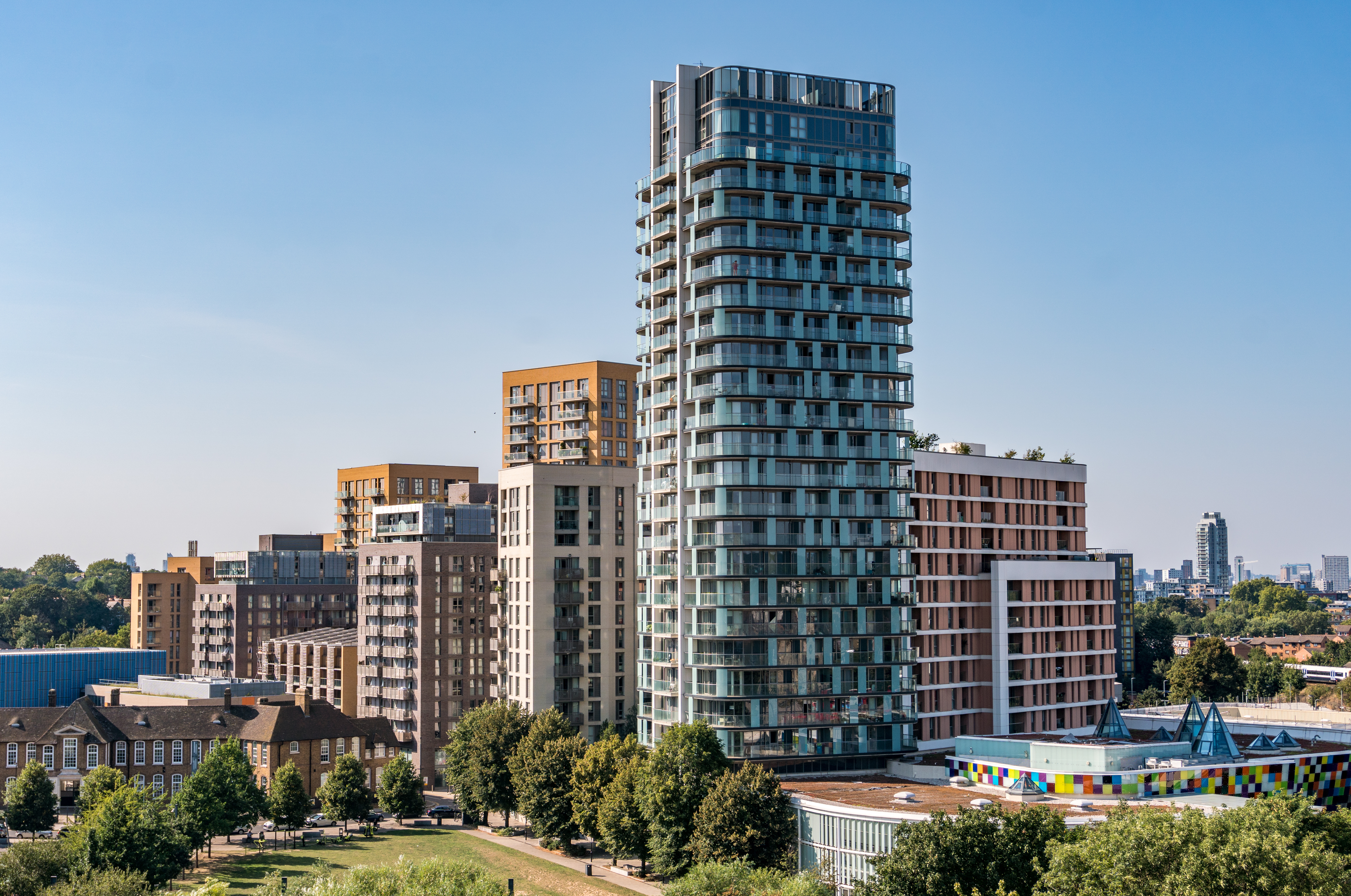
With £746m invested into Multifamily Housing during Q1 2026, the highest quarterly investment volume since Q4 2024, market fundamentals for this sector remain strong with a further £2.2bn under offer, suggesting that institutional appetite for the sector has not diminished despite a more cautious macroeconomic backdrop. The figures, drawn from CBRE's latest UK Multifamily Index, covering approximately 15,000 units across 70 stabilised schemes with a combined capital value of £5 billion, offer the clearest picture yet, demonstrating the continued strength of operational assets.
Occupational market still positive, despite fall in capital values
Across the UK, in the six months to March 2026, net income return was positive at 2.2%. However, this was balanced out by a capital value decline of -2.2% which gave a total return of 0.0% for these six months.
Market rental values grew by 1.7%, albeit this was not strong enough to offset the impact on capital values from an expansion in the capitalisation rate of c.17bps in this six-month period. Occupancy at the end of this six-month period was 95%, dropping slightly from the 97% seen at the end of September 2025.
Figure 1: CBRE UK Multifamily Index Results to September 2025 and Results to March 2026
| March 25 to Sept 25 | Sept 25 to Mar 26 | |
|---|---|---|
| Net income return | 2.2% | 2.2% |
| Capital value growth | 1.0% | -2.2% |
| Total return | 3.2% | 0.0% |
| Market rental value growth | 1.1% | 1.7% |
| Yield shift | 1bps | 17bps |
How does Multifamily Housing compare to the wider market?
Over the longer term, Multifamily Housing remains resilient compared to the wider commercial real estate market. Capital values have held up better than across the broader market, and rental growth has outpaced both the office and retail sectors over the same period. An acute supply-demand imbalance, stretched homeownership affordability, and the growth of an institutionalised private rented sector have driven rental growth and underpinned the sector’s long-term robustness.
Figure 2: Capital value and market rental value growth of Multifamily vs CBRE UK Monthly Index
When drilling down into the different commercial real estate sectors, the performance of Multifamily Housing is slightly more nuanced. Whilst outperforming both the office and retail sectors’ rental growth, performance has fallen short of the industrial sector over the last five years. Benefitting from e-commerce and supply chain tailwinds, this sector has seen particularly strong market rental value growth over this period.
For capital values, the 17bps shift outward in yield has caused multifamily capital values to decline in the last six months. However, multifamily has still seen stronger capital value growth over the longer term than office. In comparison to retail, both sectors have shown varying performance since Q1 2021, with Multifamily Housing outperforming retail since Q1 2023. Ultimately though, most recently, both sectors have held the same value as they did five years ago. Lastly, multifamily underperformed the industrial sector, which saw the strongest capital value growth over these five years, albeit with a sharp rise and fall in values through 2021 to 2023.
Overall, Multifamily Housing continues to exhibit long-term stability relative to other commercial real estate sectors. Strong income generation through a period of high inflation and rising interest rates demonstrates the sector’s long-term durability and robust fundamentals.
Figure 3: Capital value and market rental value growth of multifamily vs retail, offices, and industrial
A new geography of opportunity
Performance of the multifamily assets also varied geographically. Splitting the results by location, in the six months to March 2026, Prime Regional Centres* exhibited the smallest capital value decline compared to other locations. Capital values declined by 1.2% in Prime Regional Centres, compared to London, the South East, and Other Regional Centres, which all experienced declines of over 2%.
In terms of market rental value growth, Prime Regional Centres also exhibited the strongest performance compared to London, the South East, and Other Regional Centres. Prime Regional Centres saw a market rental value growth of 2.1% in the six months to March 2026, compared to the other locations which all hovered around 1.5%.
The Multifamily Housing sector in the UK continues to demonstrate its resilience and maturity as an asset class. Our recent acquisitions in Watford and Barking reflect our conviction that well-located, professionally managed rental homes remain in acute short supply across Greater London and the South East. As we approach 611 homes under management by the end of the year, we're focused on building a portfolio that delivers genuine long-term value for residents, for communities and for our investors.
This trend also holds true for total return, where Prime Regional Centres had a total return of 0.9%, compared 0.1% seen in the South East, and slightly negative total returns seen in London and Other Regional Centres. Prime Regional Centres are characterised by a structural undersupply of rental housing, combined with large and growing graduate and young professional populations, which have led to deeper demand pools looking for higher quality rental housing – underpinning the strength of Prime Regional Centres compared to other locations.
Figure 4: Capital value and market rental value growth by location
*Statistics for Prime Regional Centres based on assets in Birmingham, Bristol, Leeds, and Manchester
Investor appetite remains strong in a structurally undersupplied market
With living placed as the top asset class in our European Investor Intentions Survey for two consecutive years, it is clear that investor appetite in this sector endures, particularly for Multifamily Housing, which is a market that continues to show strong fundamentals and retains its long-term appeal. Whilst a total return of 0.0% may at first seem unimpressive, net income return was positive at 2.2%, and market rental values increased by 1.7% in the six months to March 2026.
Moving forward, with challenges to viability including regulation and high construction costs, the chronic undersupply of rental housing is set to continue, offering an important driver of rental growth. This could be particularly notable in Prime Regional Centres due to their strong structural demand drivers and supply-side constraints. Despite these regional distinctions, over the longer term, Multifamily Housing remains resilient compared to the wider commercial real estate market, and future investor appetite in this sector is set to remain.
Want to view the figures?
Contacts




Related Services
- Living
Multifamily / Build-to-Rent
We advise on all aspects of the multifamily market through our unparalleled advice on funding, development and transaction strategies.
- Property Type
Living
Unlock residential real estate potential with expert investment, financing, valuation, agency, and design strategies across all living sectors.
- Valuation & Advisory Services
Living Property Valuation
Delivering accurate, timely and reliable residential property valuations. We offer a comprehensive suite of property valuation services based on a str...